

eStudio Visit with Ji Won Cha
Ji Won Cha’s art captures the feeling of sublimity, expressing it through her fluid brushstrokes and color palettes..

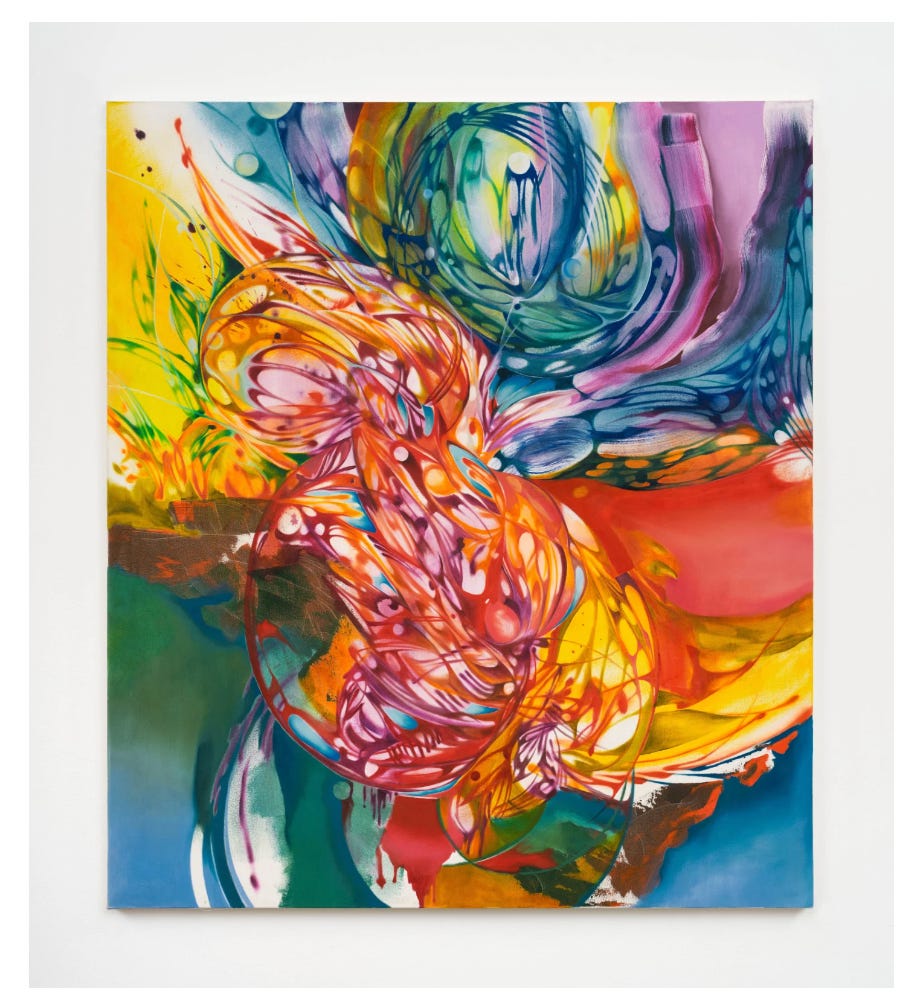
There are moments in life when words fail to capture the depth of our emotions, leaving us with an unsettling sense that everything could change in an instant. Yet, when you find the sublime, those moments of profound relaxation, they draw you in and offer a sense of peace amidst the uncertainty.
Ji Won Cha’s art captures the feeling of sublimity, expressing it through her fluid brushstrokes and color palettes. Her work creates an extended moment of anticipation, inviting viewers to linger in the space between the present and the hopeful promise of the future.
Emphasizing themes of the unknown and the loss of control, her paintings are dedicated to capturing the contradictory emotions of hope and despair, constantly questioning the existence of fate.
We reached out to Ji Won Cha, curious to learn more about her and her artistic practice.
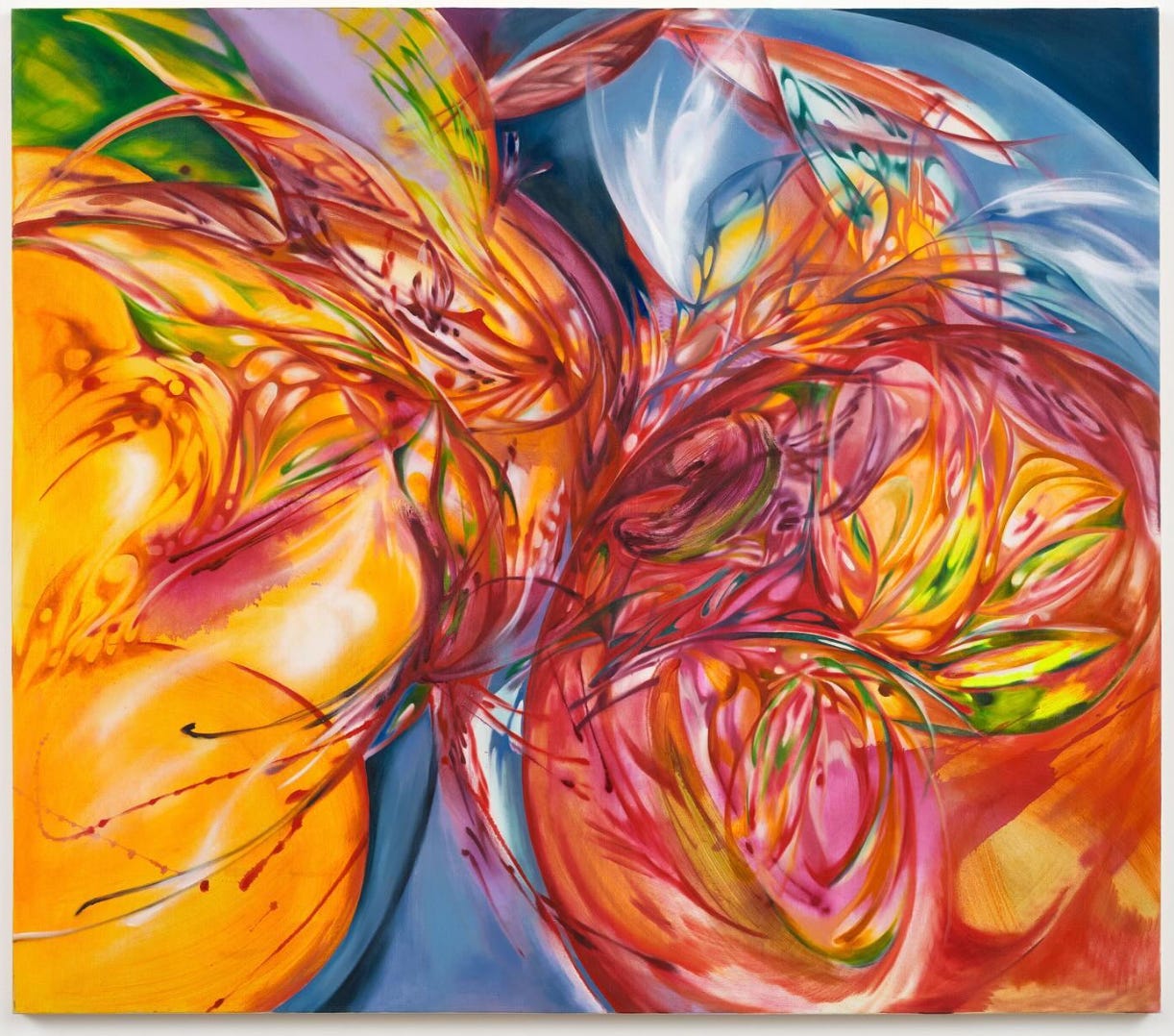
Hi Ji Won. Your recent solo show at Baert Gallery in Los Angeles looked amazing. What can you tell me about the work you showed there?
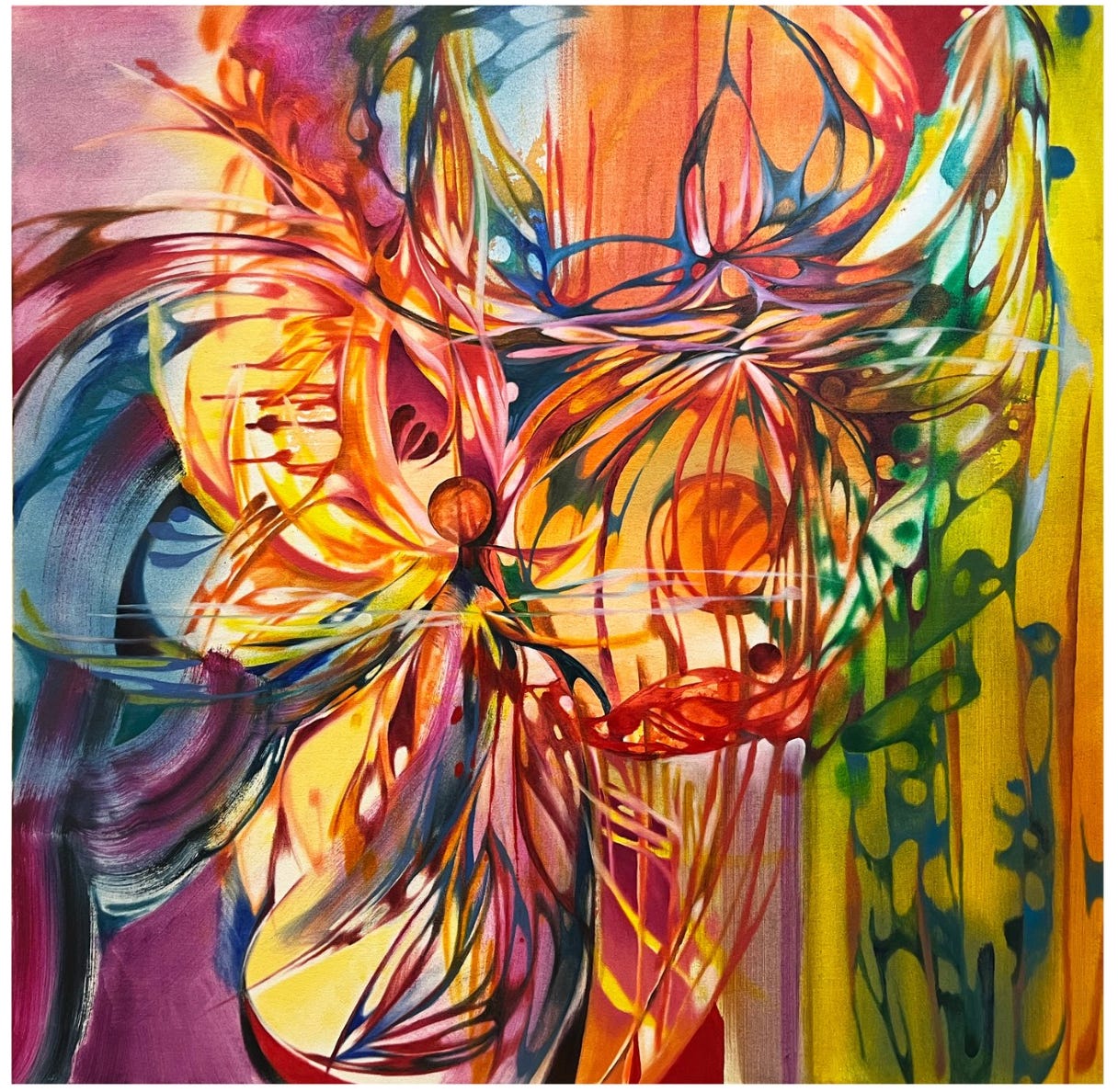
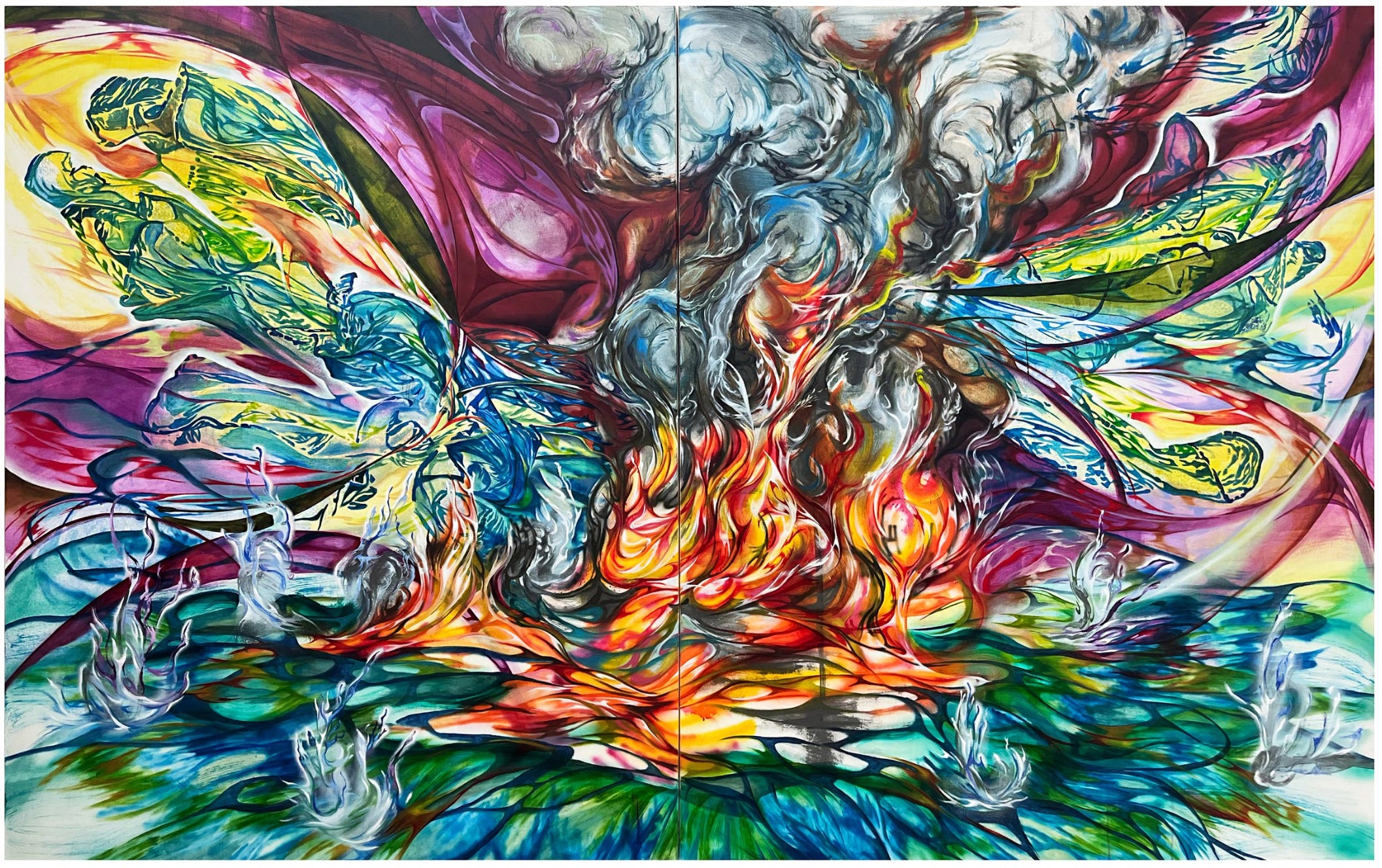
Thank you for your kind words, I had ten works in total, the biggest painting being 200 x 300 cm and the smallest 25 x 55cm. The series of paintings were an inquiry into questioning and capturing the feeling of sublimity in today’s time. While most of the paintings started from a landscape photography or a set of images of natural objects I had gathered, the finished paintings focus more on capturing and mapping the feelings that swarmed in myself at the moment of when I encountered the subject matter and while I was again recollecting the memories while creating the works. Thus, the focus point is on trying to depict and find what evokes the feeling of sublimity, trying to capture the coexistence of contradicting feelings - for example, hope and despair, beauty and terror - and processing these complex emotions of uncertainties that hold a place both in our personal lives and in a bigger construction of society.
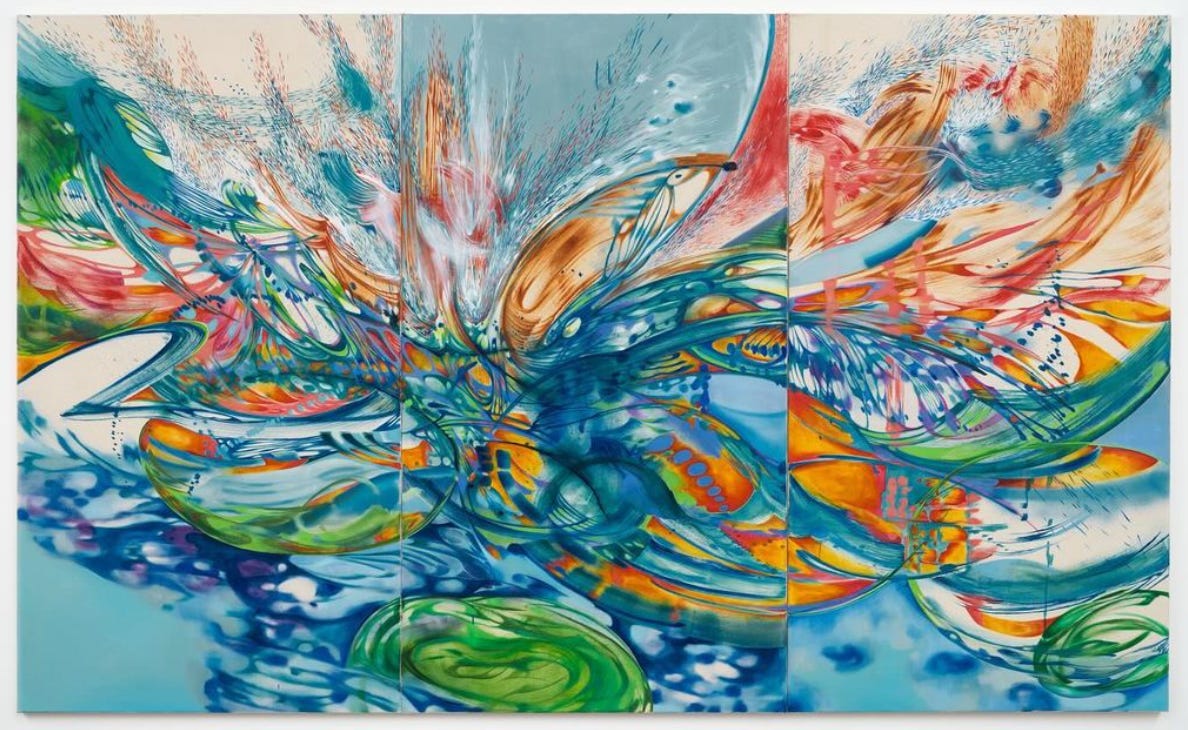
Your colors are really vibrant for the most part - how do you think about those choices?
Colors come to me very intuitively. I think more of the temperature of the paint rather than the color of the paint when I am painting. I sometimes decide what predominant color I would like the painting to have when I prepare for a certain painting.
Your work has a distinct style. Can you tell me how you arrived at this aesthetic and what inspires it?
I think I have resulted to the way I paint when I figured out concretely of what I wanted to paint about. Which for me, is again, inquiring the feeling of sublimity in today’s time. I always say “today’s time” as I think it is very different from what the sublime was before. I also think where we can find sublimity today differs from where the traditional sublime paintings derived from.
When the sublime in art is suggested, the most common sublime painting one would think of would be a painting of the vast nature capturing the wilderness and awe. At this time, the Industrial Revolution was progressing and people began longing for untouched nature, culminating in the concept of the sublime, which was a direct comparison to man-made materials. Nature was much more beautiful as well as containing much more power. However, in today’s day where the line between the natural and artificial is blurred, I began questioning where one could find the sublime.
I started focusing more on the feeling of sublimity. The sublime experience is fundamentally a transformative shock, facing the contradictory feelings of beauty and terror/awe and shock through a confrontation of the “unknown”. With our unstable present with the rise of the pandemic, wars, personal trauma, etc. I realized we all individually feel an overwhelming sense of sublimity every day in our lives, where we question our future and fate every day. We go on feeling complex emotions of hope and despair, happiness and contempt with this uncertainty, which I thought was very similar to the feeling of anxiety, resulting in me naming the topic of my current practice “the anxious sublime”.
And getting back to the question with all the context, I think I resulted in the way I paint to be more honest within myself in the painting. Being more revealing of my own emotions and my thoughts, the way I paint now is a way to process my thoughts and emotions.
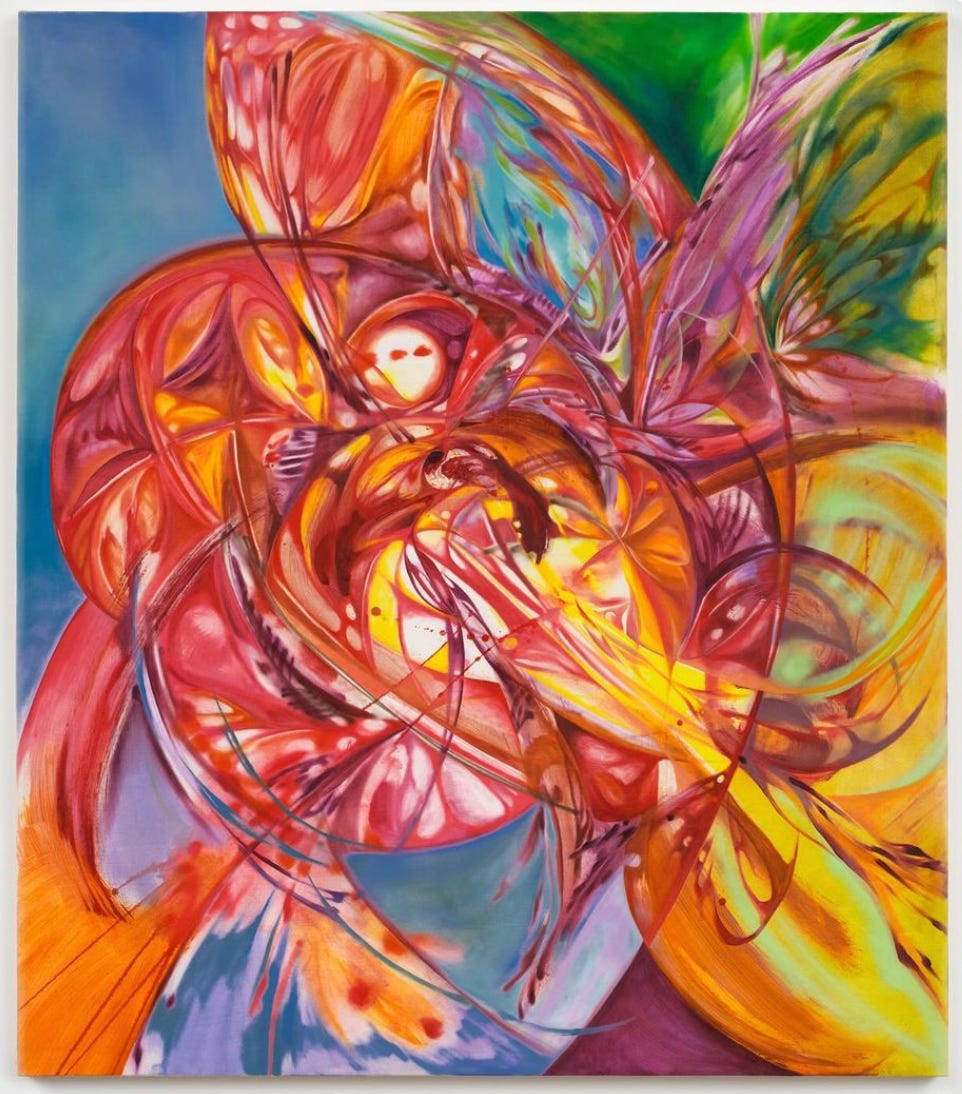
On first glance, your pieces have a beautiful fluidity to them, as if you embrace the charm of wonky lines and marks. Are you intentionally seeking a loose quality to balance out the more formal elements in your work?
Yes, in a way. Because contradiction is also a big topic for me, I like to portray it in the paintings as well. Fluid marks co-exist with more defined, strictly planned marks. It’s like opposite feelings co-existing within oneself. Combining a more expressive and uncontrolled gesture like throwing fluid paint on the canvas, with more controlled and intentional brushstrokes is a way to portray contradiction and balance.
The concept of ‘fate’ is a recurring theme in your art. Can you elaborate on how you interpret fate and how it shapes the narratives in your paintings?
Fate came along with the feeling of uncertainty. When one is uncertain about their future, I think it is only natural to think about fate. You start questioning everything from why you were born, why you are living, what the purpose is, and what your fate is. The idea of fate and free will is a theme that is playing an ongoing tug of war in my mind.
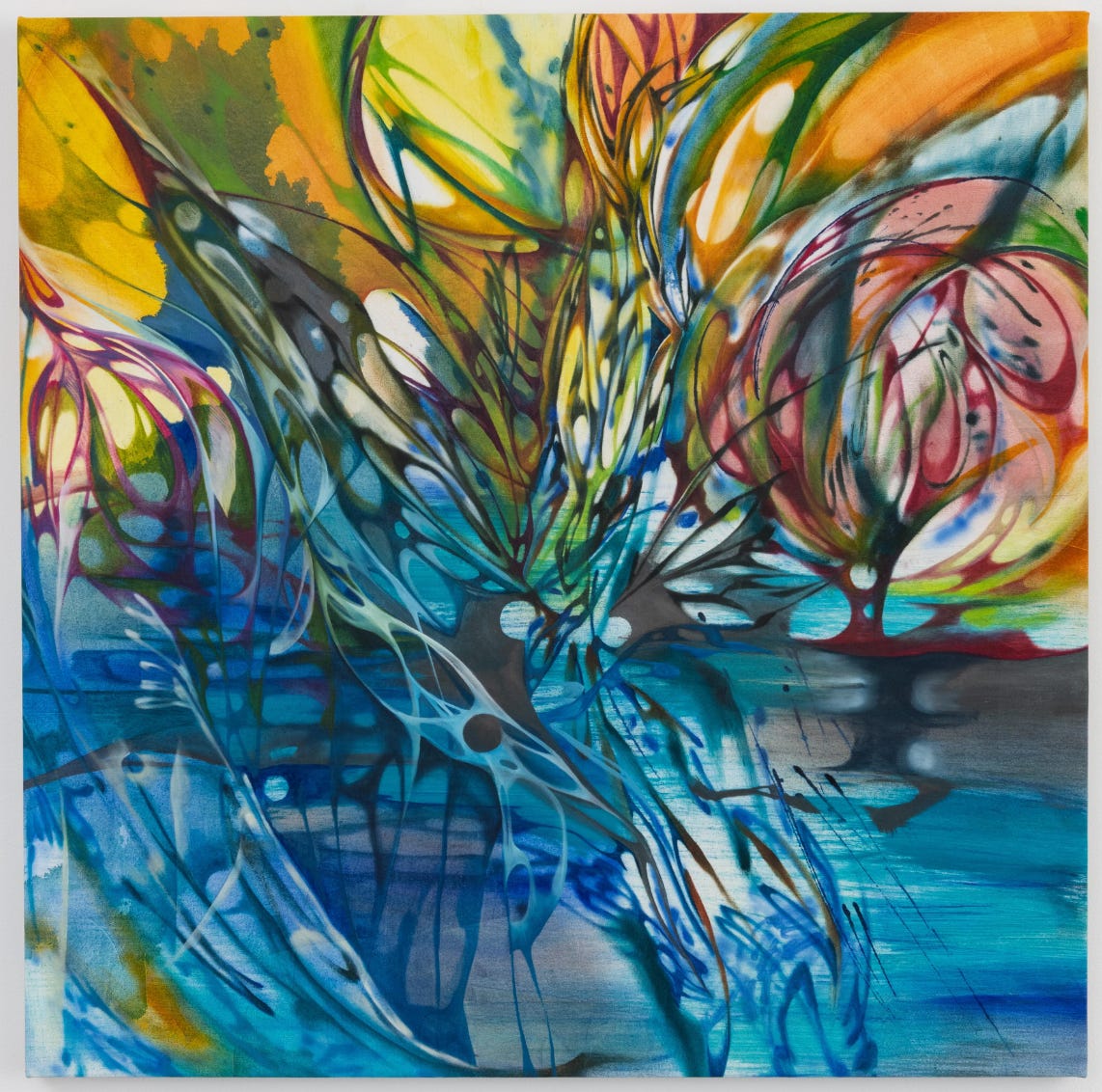
“Being more revealing of my own emotions and my thoughts, the way I paint now is a way to process my thoughts and emotions.”
What is your earliest memory of creating something, and what was it?
I don’t know what age I was, it was probably when I could barely walk. My mother always gave me some paper and glue when I went to a playground in my neighborhood, and I remember making some drawings with sand and glue. I would put glue on the paper and pour sand over it, creating a sand drawing, it was probably more of a sand blob.
Can you describe your studio practice to me? Do you have any necessities when you are present in the studio?
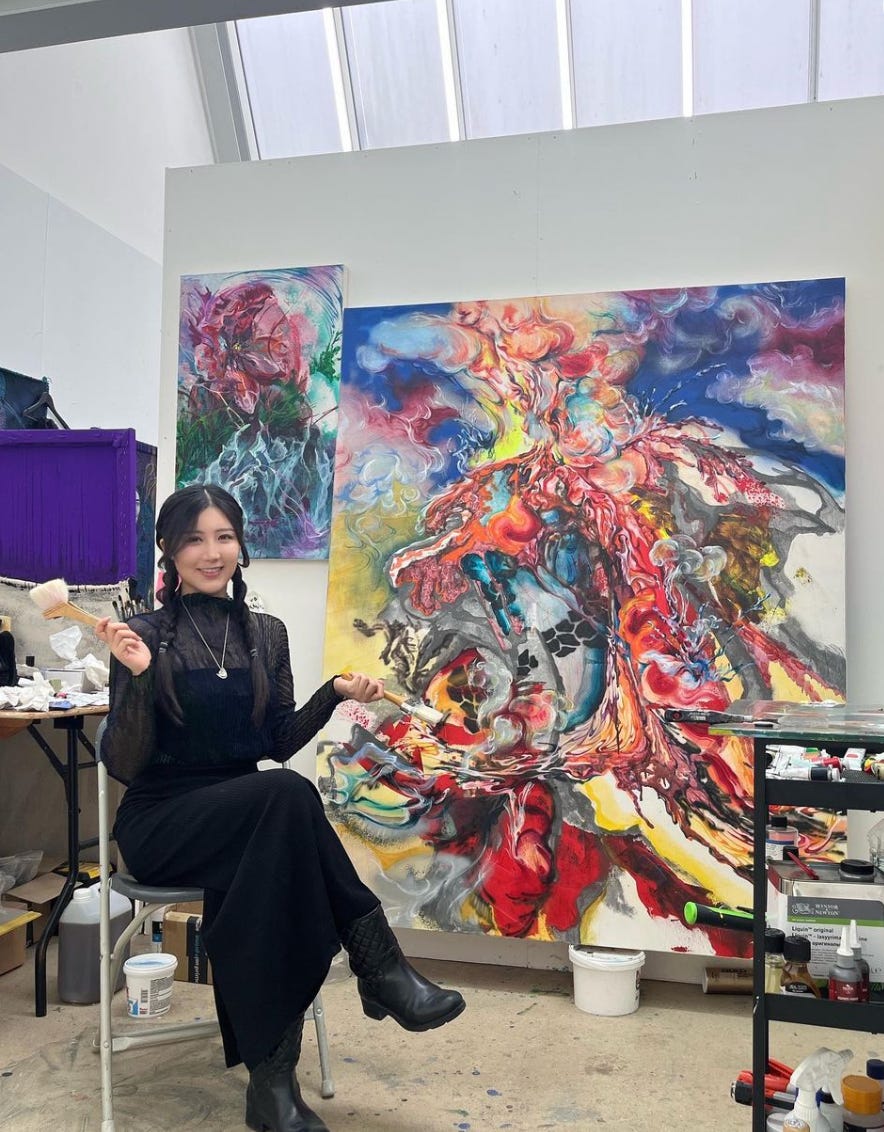
My studio practice is very straightforward. I only paint in my studio and I treat it like a workplace. I’m the kind of person who needs a separate place to work and cannot live in my studio. When I am in the studio to paint, I would be fully committed to the moment and to the work that is in front of me.
I don’t need any strict necessities, but good music and some bubble tea always helps me going.
What advice would you give a young creative person like yourself?
I think it is always important to stay motivated and enjoy all the moments when creating a work. I think it always shows in the end how much passion and care you put into the work.
Thank you Ji Won Cha for answering our questions xx
For more on Ji Won Cha, follow her on Instagram